

What does it cost to have polyester damage repaired?
An honest answer up front: there is no fixed price per crack. What we do is assess the damage first and then make a quote to suit. What makes the difference is not how big the damage looks but how deep it sits.
How the price is built up
Five things decide what a repair costs
There is no fixed price list, because no two cases of damage are alike. What decides the work is how large the damage is, how deep it sits in the material, whether it is above or below the waterline, what colour surrounds it and how well the spot can be reached. Those five together decide the quote.
01
The extent of the damage
It is not the length of the crack that counts but how much laminate has to come out. For a good bond the damage is ground back in a taper, and that area is always considerably larger than what you see from the outside.
02
How deep it sits
Damage in the gelcoat alone is a fraction of the work of damage that goes through the laminate. That difference is usually clear enough on a photo.
03
Above or below the waterline
Below the waterline drying time, a barrier coat and antifouling are added. That makes the same crack a considerably bigger job.
04
The colour
White is manageable. A coloured hull that has been in the sun for years needs mixing and test pieces until it is right, otherwise you can see the repair from the jetty.
05
Accessibility
Work on a side deck at eye level goes faster than work down in a keel sump or behind a built-in locker.
By damage type
What you can roughly expect
For each type of damage, what it involves. When in doubt: the photo decides.
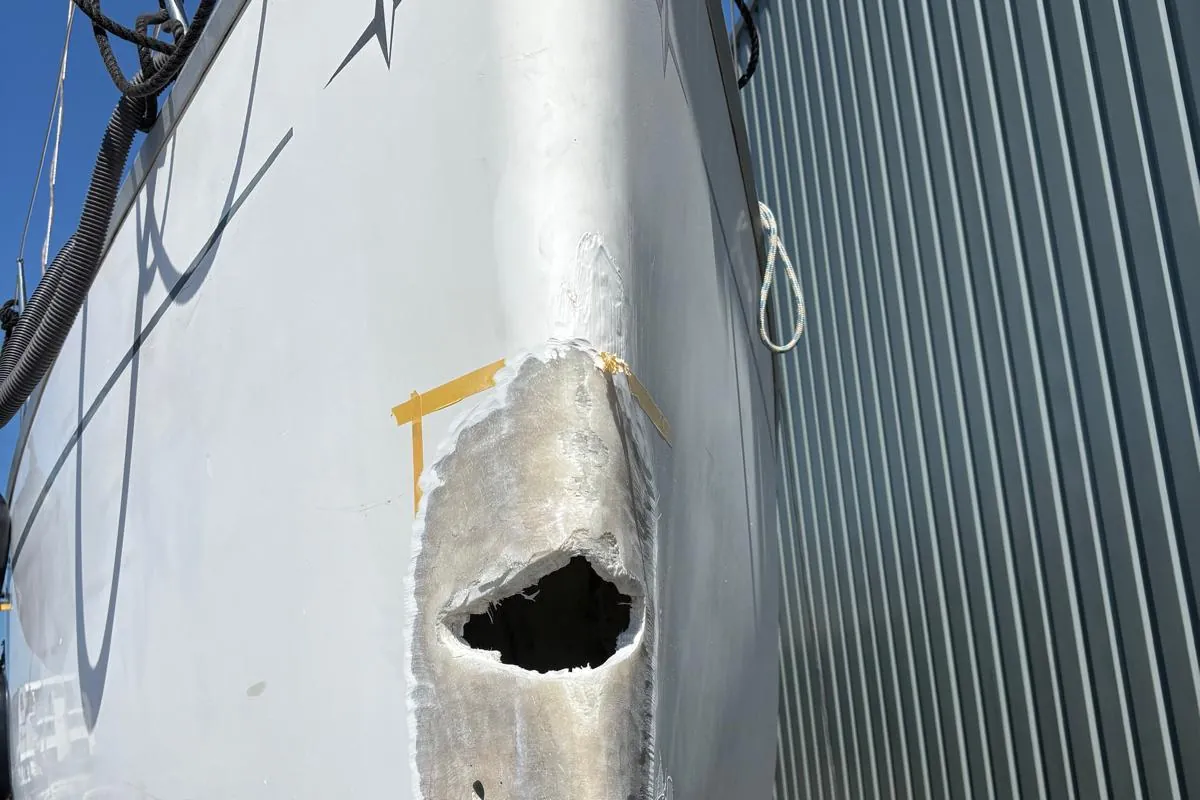
Crack or hole in the hull
A knock against a pile while berthing, or run aground. Structural repair of the laminate.
often via insurance
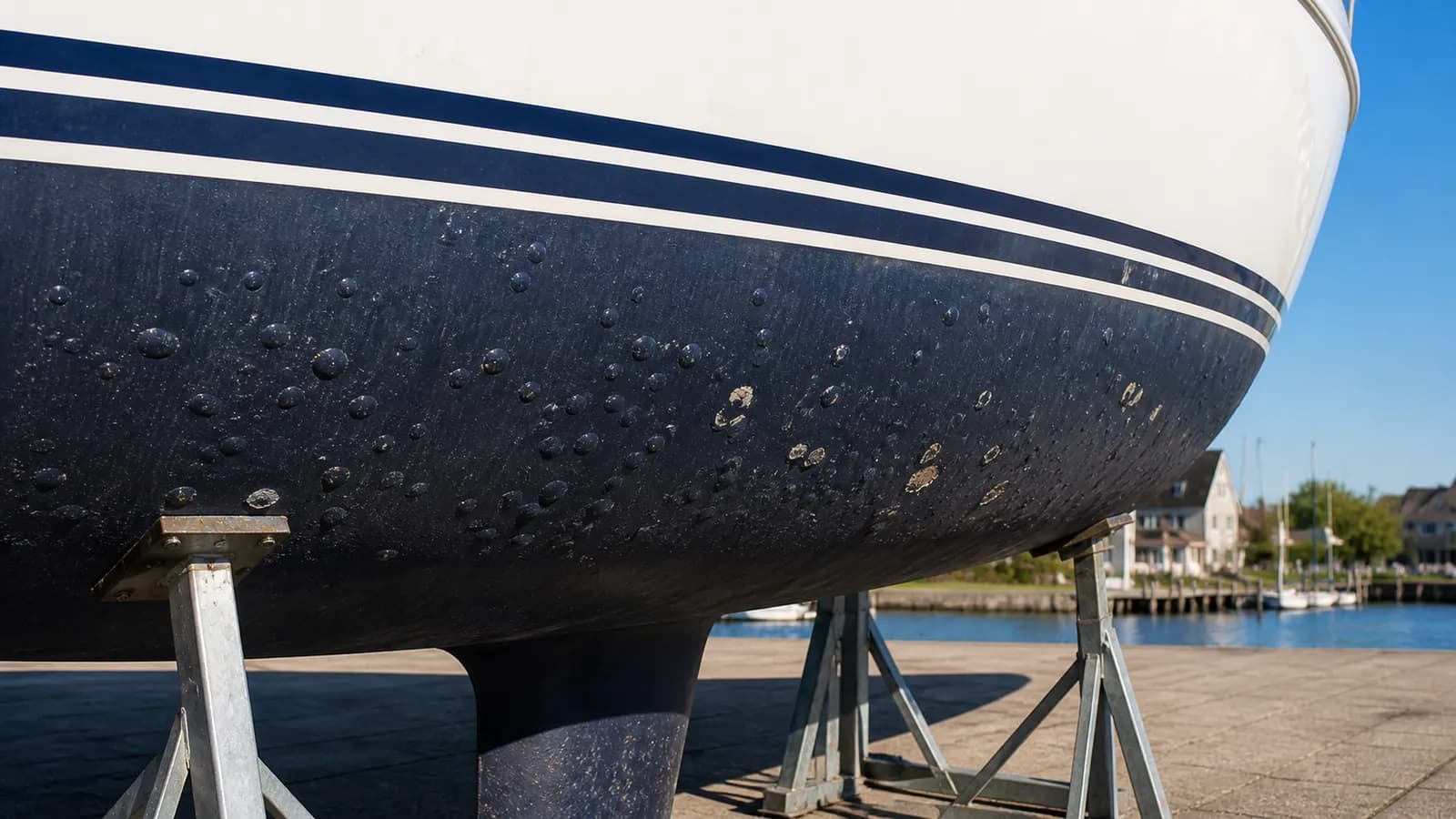
Osmosis and blisters
Blisters on the underwater hull. Needs drying and a barrier coat, not a job to fit in between.
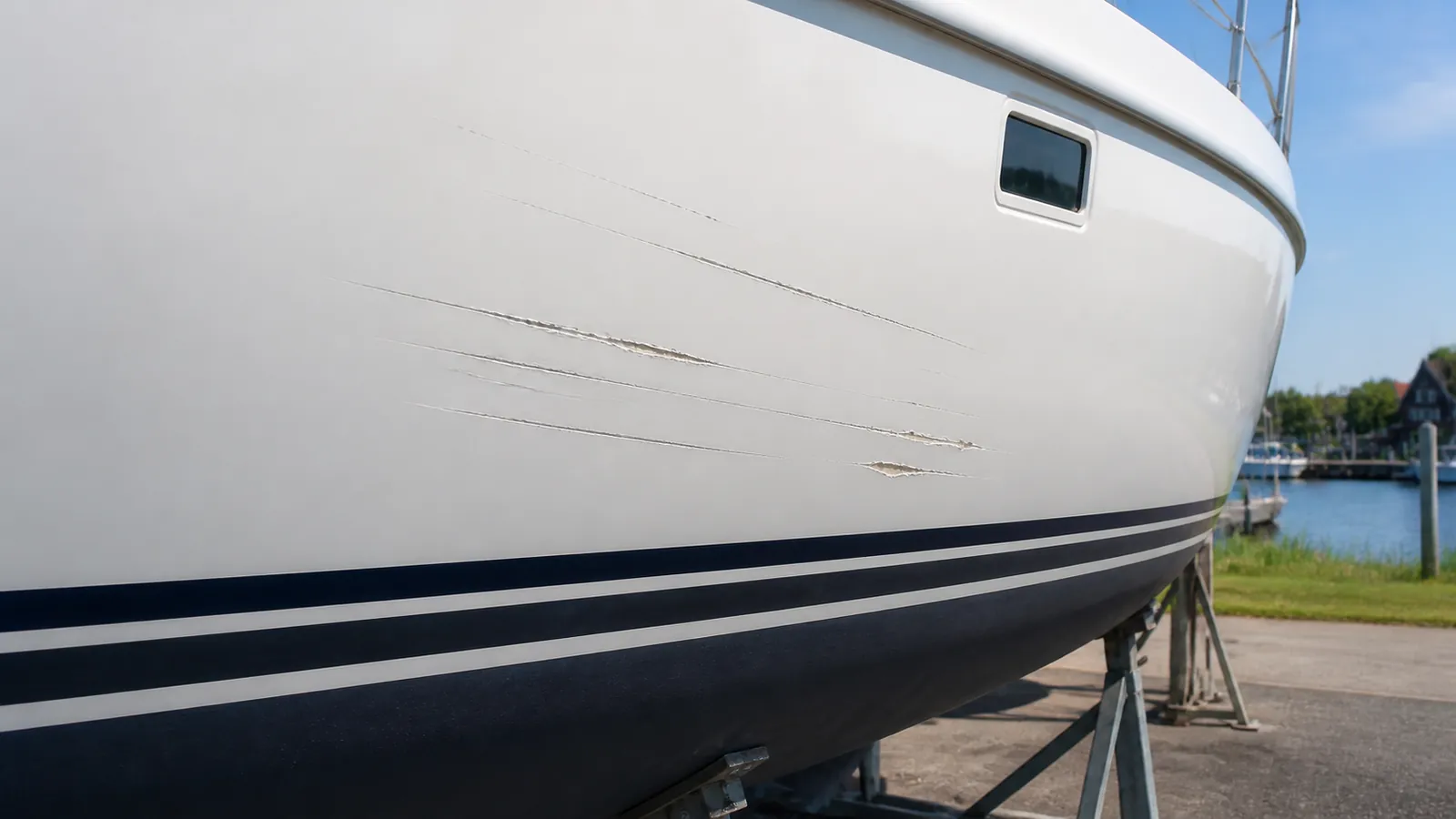
Gelcoat and scratches
Berthing damage, scratches along the topsides, dull or discoloured gelcoat. Often done on site in a few hours.
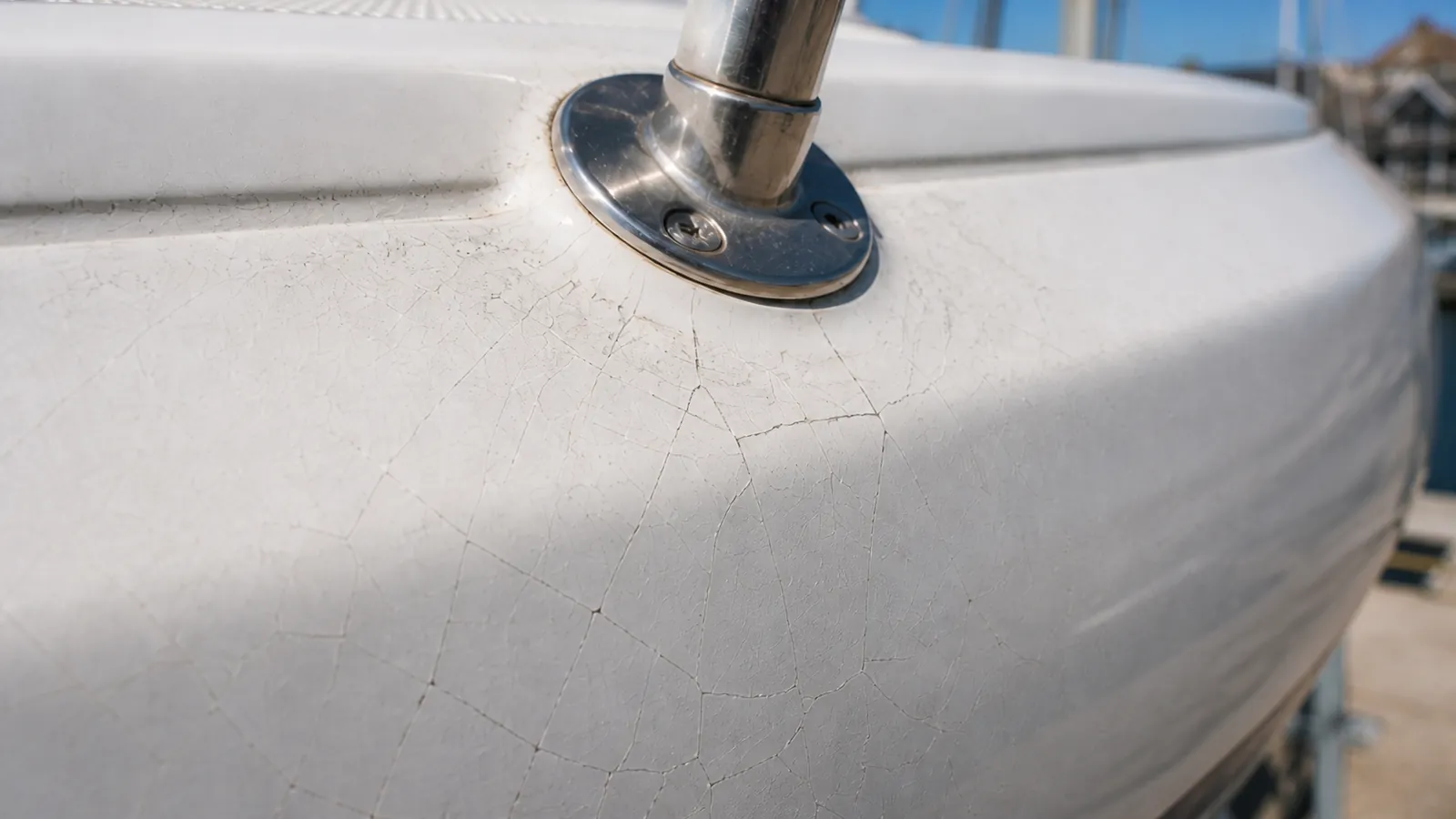
Crazing and hairline cracks
A fine web of cracks in the gelcoat, often around fittings or at stress points. Rarely urgent, but it is a signal.
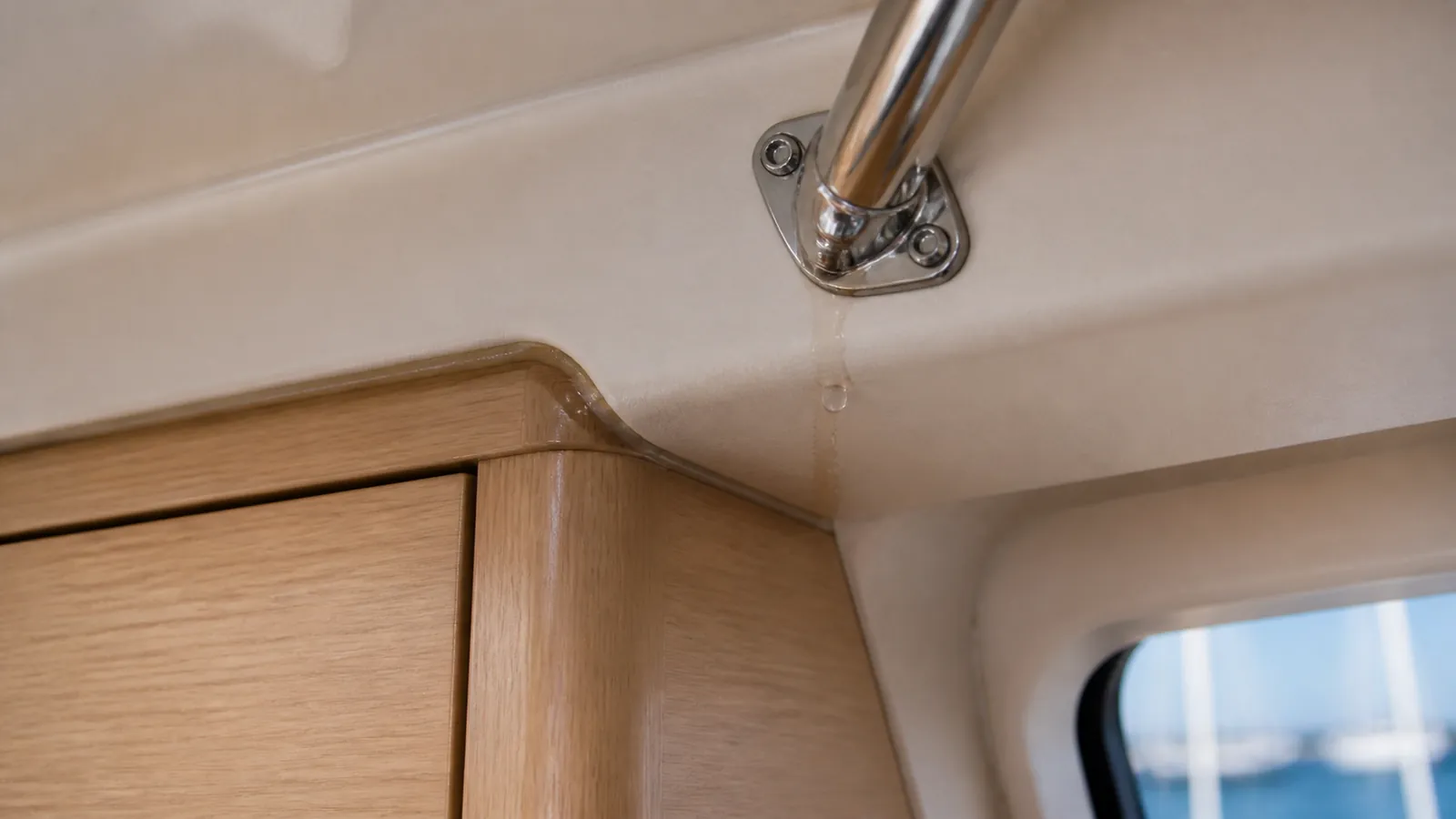
Leak with no visible damage
Water in the bilge while nothing looks broken. Usually skin fittings, seams or keel bolts.
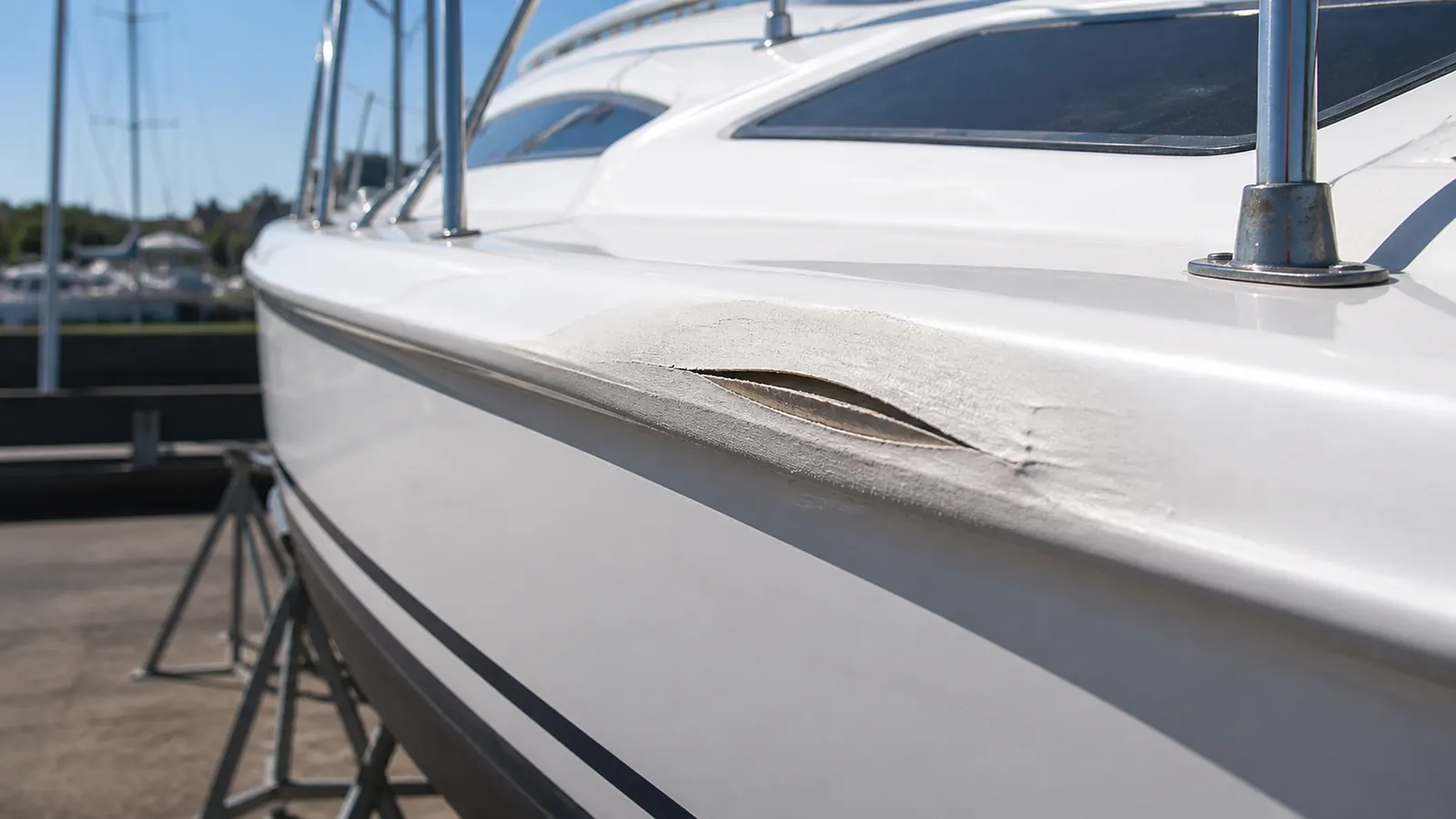
Delamination
A soft or springy patch in deck or hull. The laminate has come away from the core.