

Damage types
What damage does your boat have?
Six kinds of damage come up most often. For each one you can read how to recognise it, how we tackle it, how long it takes and whether it can be done on site.
The six damage types
Time scale: 1 out of 4 compared with the other damage types.
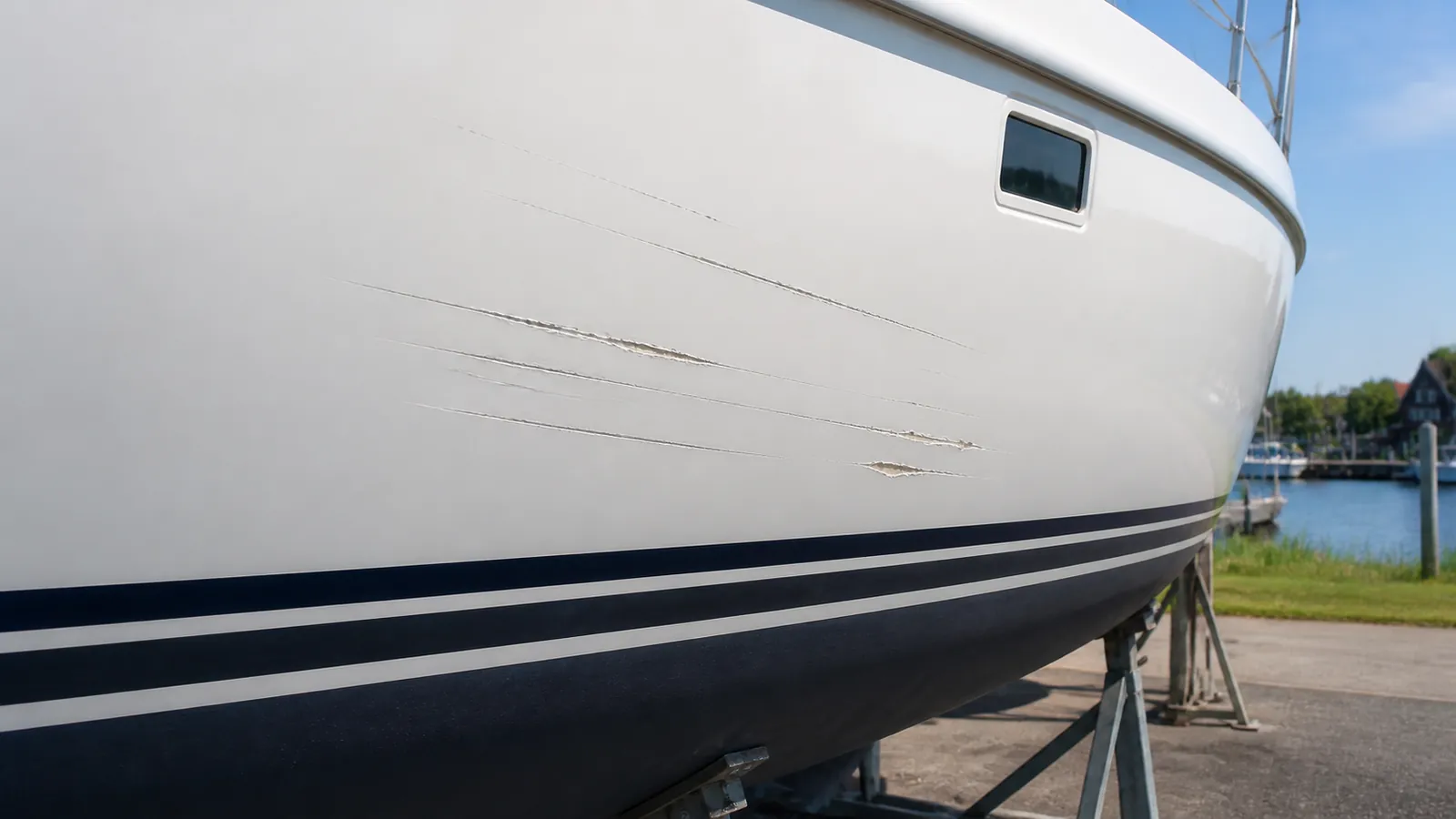
Gelcoat and scratches
Berthing damage, scratches along the topsides, dull or discoloured gelcoat. Often done on site in a few hours.
Scratches or scuffs that show up white but do not go through the laminate · Black marks from a jetty or fender that will not polish out
Time scale: 1 out of 4 compared with the other damage types.
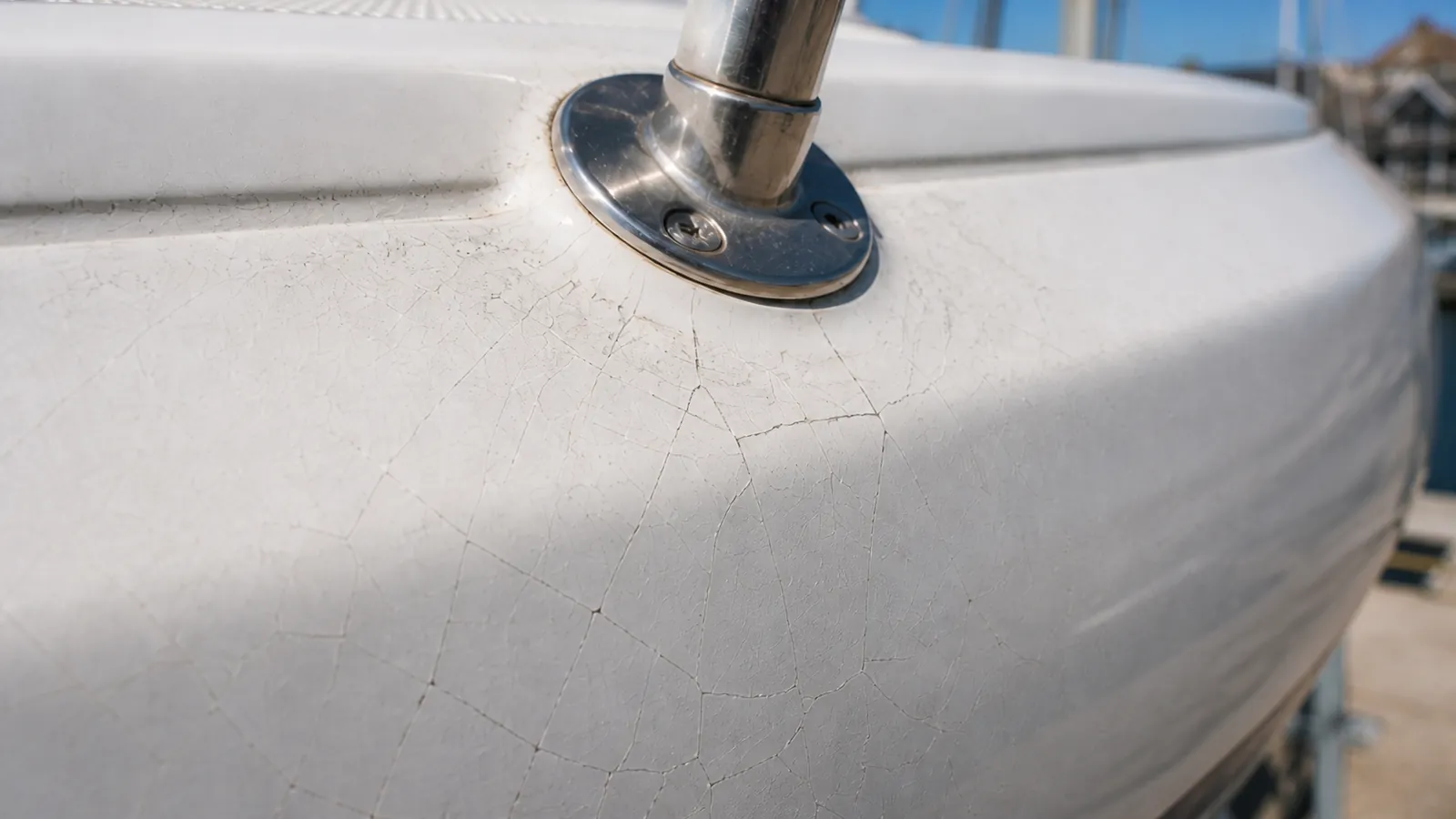
Crazing and hairline cracks
A fine web of cracks in the gelcoat, often around fittings or at stress points. Rarely urgent, but it is a signal.
A fine network of hairline cracks, like the crazing in old porcelain · Concentrated around fittings, stanchions, hatches and the mast step
Time scale: 2 out of 4 compared with the other damage types.via insurance
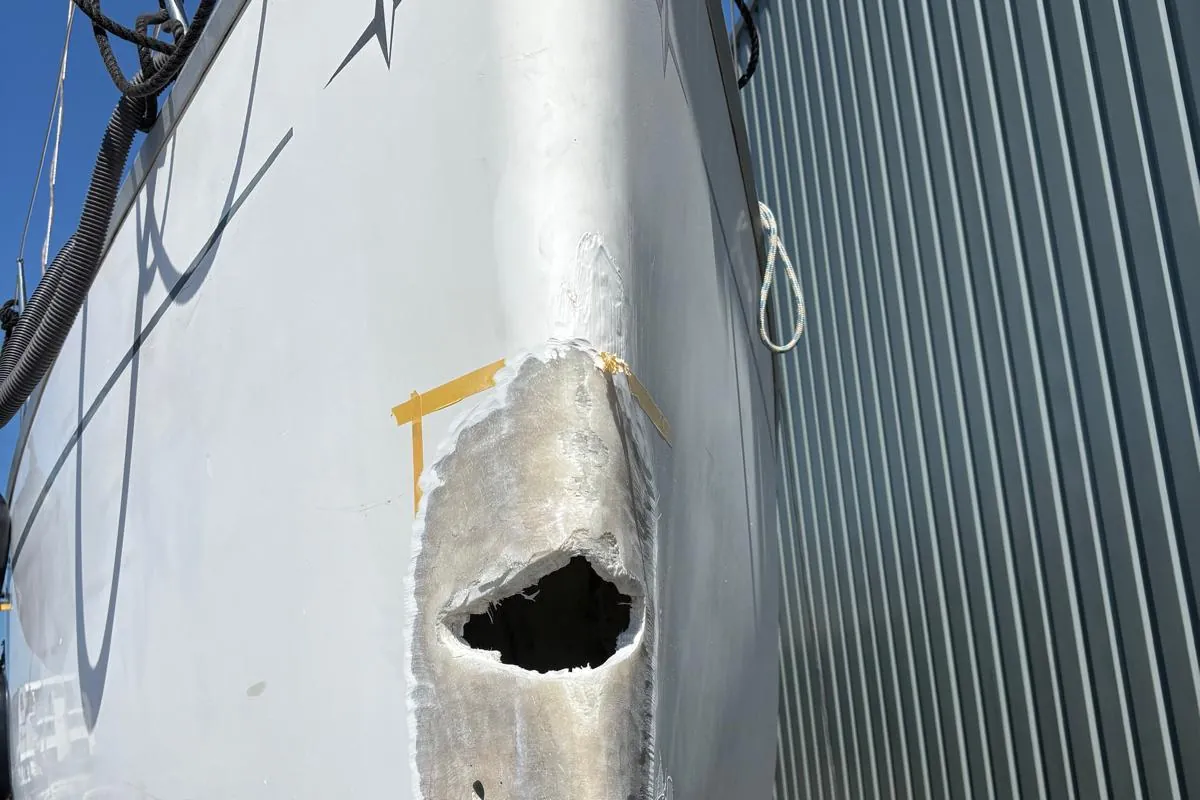
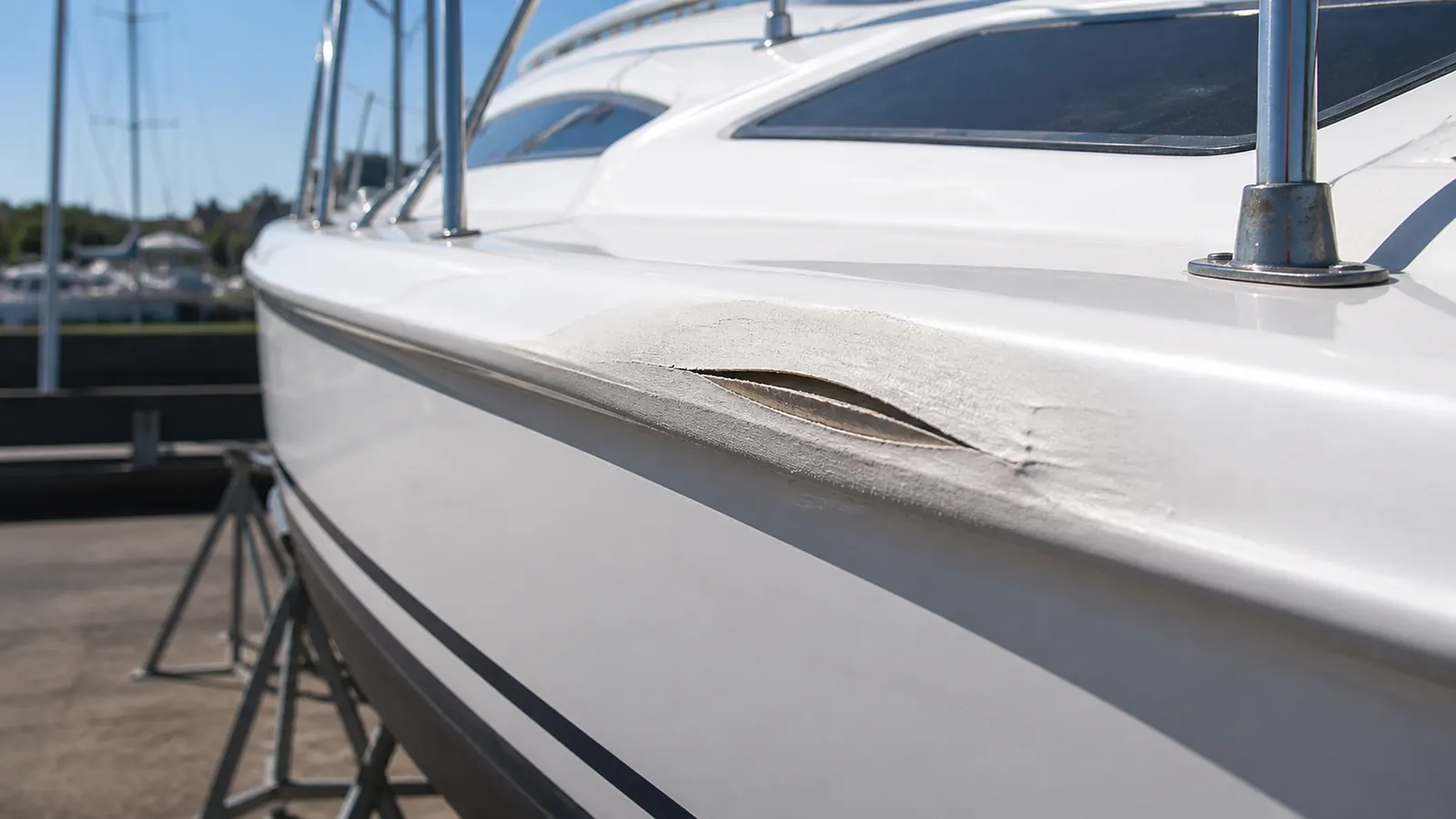
Crack or hole in the hull
A knock against a pile while berthing, or run aground. Structural repair of the laminate.
A visible crack or hole, with ragged white material at the edges · A dent or split exactly where you struck something
Time scale: 2 out of 4 compared with the other damage types.
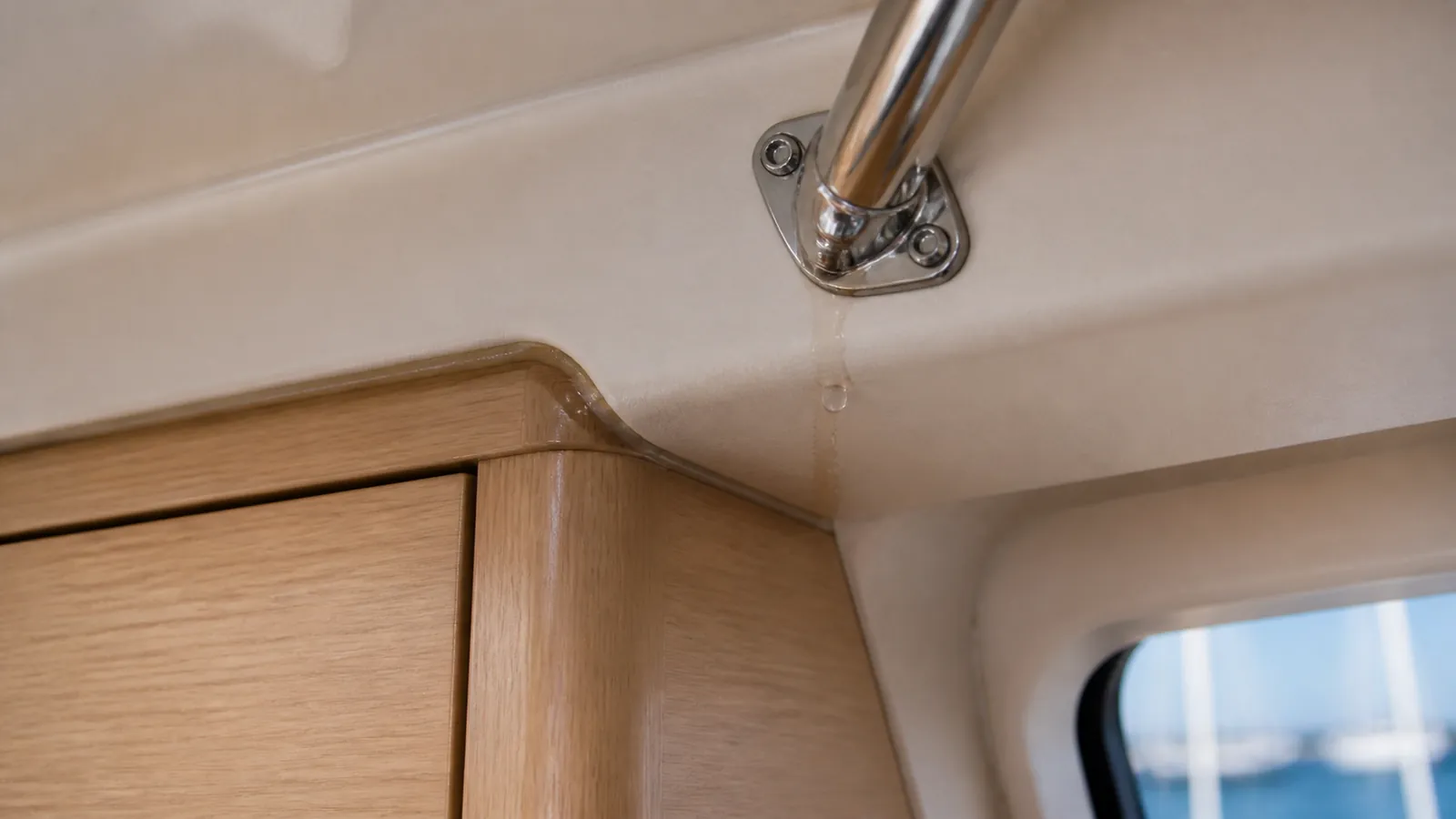
Leak with no visible damage
Water in the bilge while nothing looks broken. Usually skin fittings, seams or keel bolts.
Water in the bilge with no identifiable damage · Water that returns after pumping out, even with the boat lying still
Time scale: 3 out of 4 compared with the other damage types.
Delamination
A soft or springy patch in deck or hull. The laminate has come away from the core.
A soft, springy patch in the deck, often around fittings or a hatch · A hollow sound when you tap across the surface with a coin or plastic hammer
Time scale: 4 out of 4 compared with the other damage types.
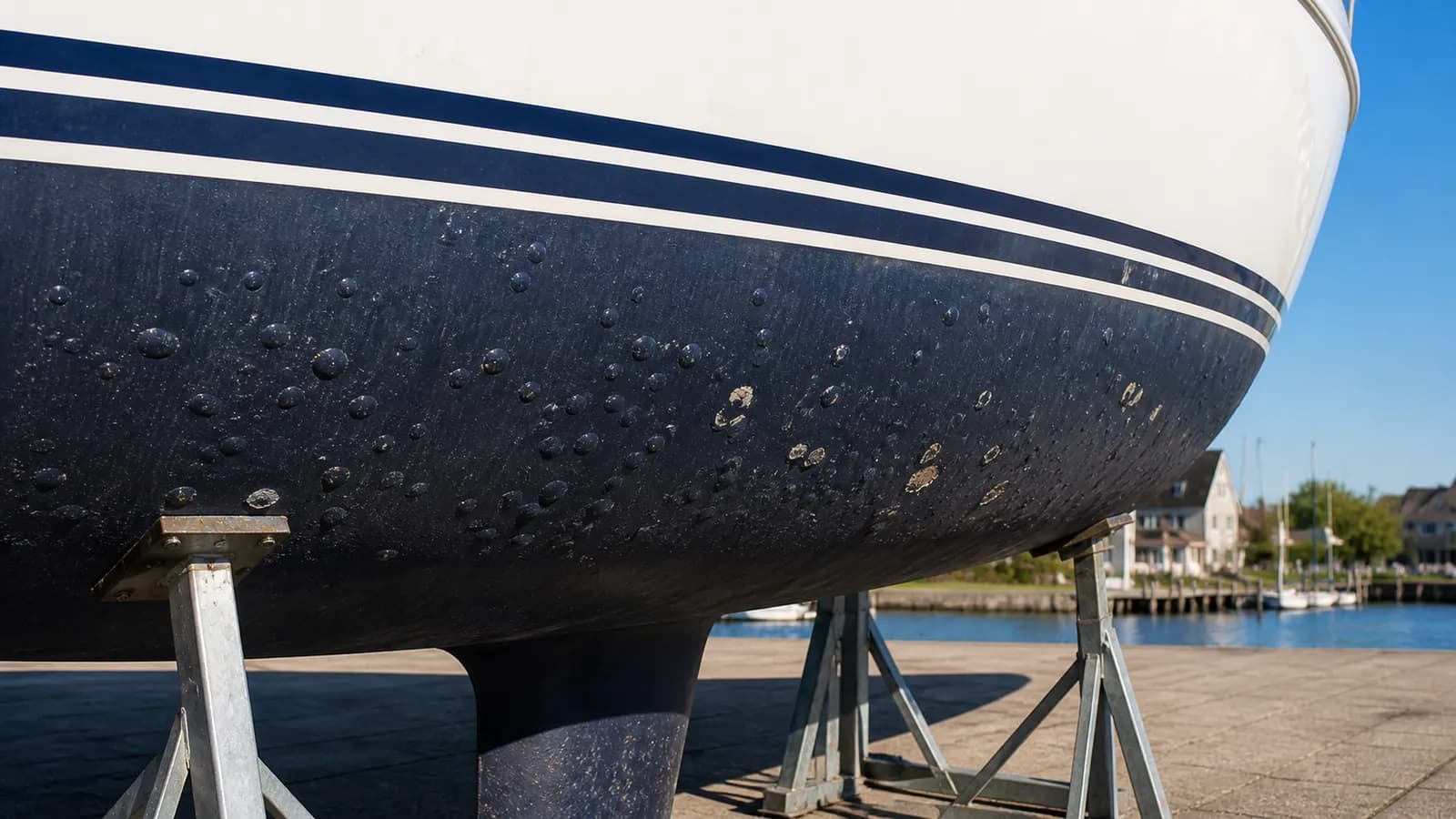
Osmosis and blisters
Blisters on the underwater hull. Needs drying and a barrier coat, not a job to fit in between.
Blisters or bumps on the underwater hull, visible as soon as the boat is out of the water · A sour or vinegary smell when a blister breaks open
Not sure what it is?
You do not have to be. Send a photo and a short description, and we will tell you what we are looking at and roughly what it will cost.