

Damage type
Repairing crazing and hairline cracks in gelcoat
A fine cobweb pattern of cracks in the gelcoat, usually around fittings, hatches or places where the deck flexes. Crazing is almost never an immediate danger, but it is a signal: the gelcoat is cracking because the laminate underneath is moving. Fill the cracks without looking at the cause and they are back within two seasons.
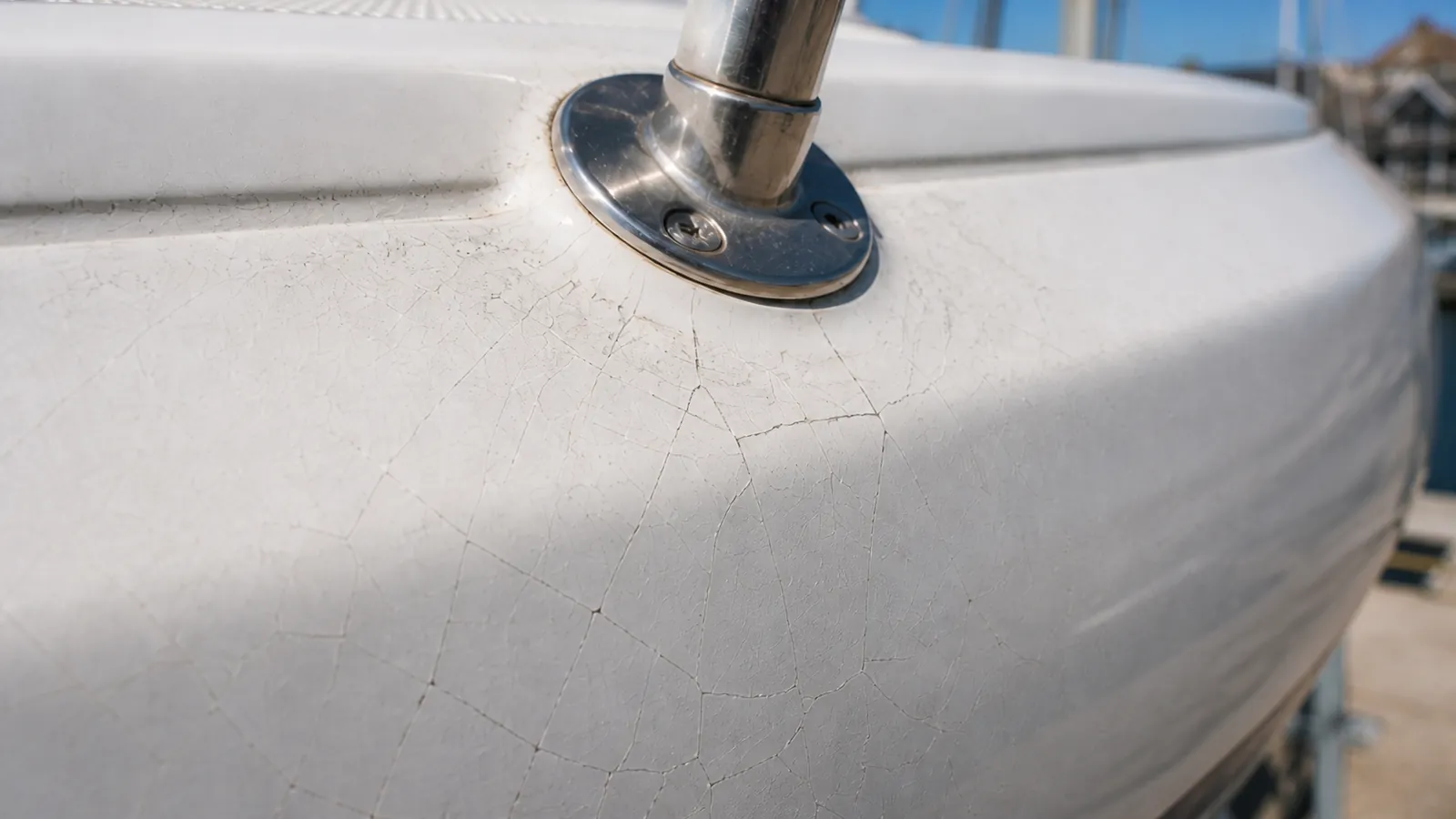
How to recognise it
- A fine network of hairline cracks, like the crazing in old porcelain
- Concentrated around fittings, stanchions, hatches and the mast step
- A star pattern around one point, which points to an impact rather than fatigue
- Cracks that have visibly lengthened after a cold winter
How we tackle it
- 1
Find the cause first
Fatigue crazing over a larger area calls for something different from a star from an impact. Around fittings the fastening is often the culprit: over-tightened, or fitted without a backing plate.
- 2
Grind out until the cracks are gone
Hairline cracks run deeper than they look. They are opened up until no crack line is visible; filling without opening gives a repair that simply passes the cracks on.
- 3
Reinforce where needed
If the cause is flexing, cosmetic repair alone is pointless. Then extra laminate or a backing plate goes under the fitting first.
- 4
Gelcoat and polish
Filling with gelcoat in the mixed colour, sanding and polishing until the surface runs through again.
Frequently asked questions about crazing and hairline cracks
Are hairline cracks in gelcoat dangerous?
Usually not. Crazing sits in the gelcoat, and that carries no load. It becomes a question when the cracks run through into the laminate, or when they sit around the mast step or the keel bolts. There, movement in the laminate is a signal.
Why do hairline cracks come back after a repair?
Because only the cracks were filled and the cause was not removed. If the laminate keeps flexing at that spot, the new gelcoat cracks just as readily. That is why we look first at why it is moving.
Can I deal with hairline cracks myself?
A single spot, yes, as long as you grind the cracks open first. Filling without opening does not work: the crack sits deeper than it looks and simply comes back through the new layer.
Damage to your boat? Send a photo.
A photo and a short description are enough to assess the damage. Then you hear what is needed and get a quote to suit.